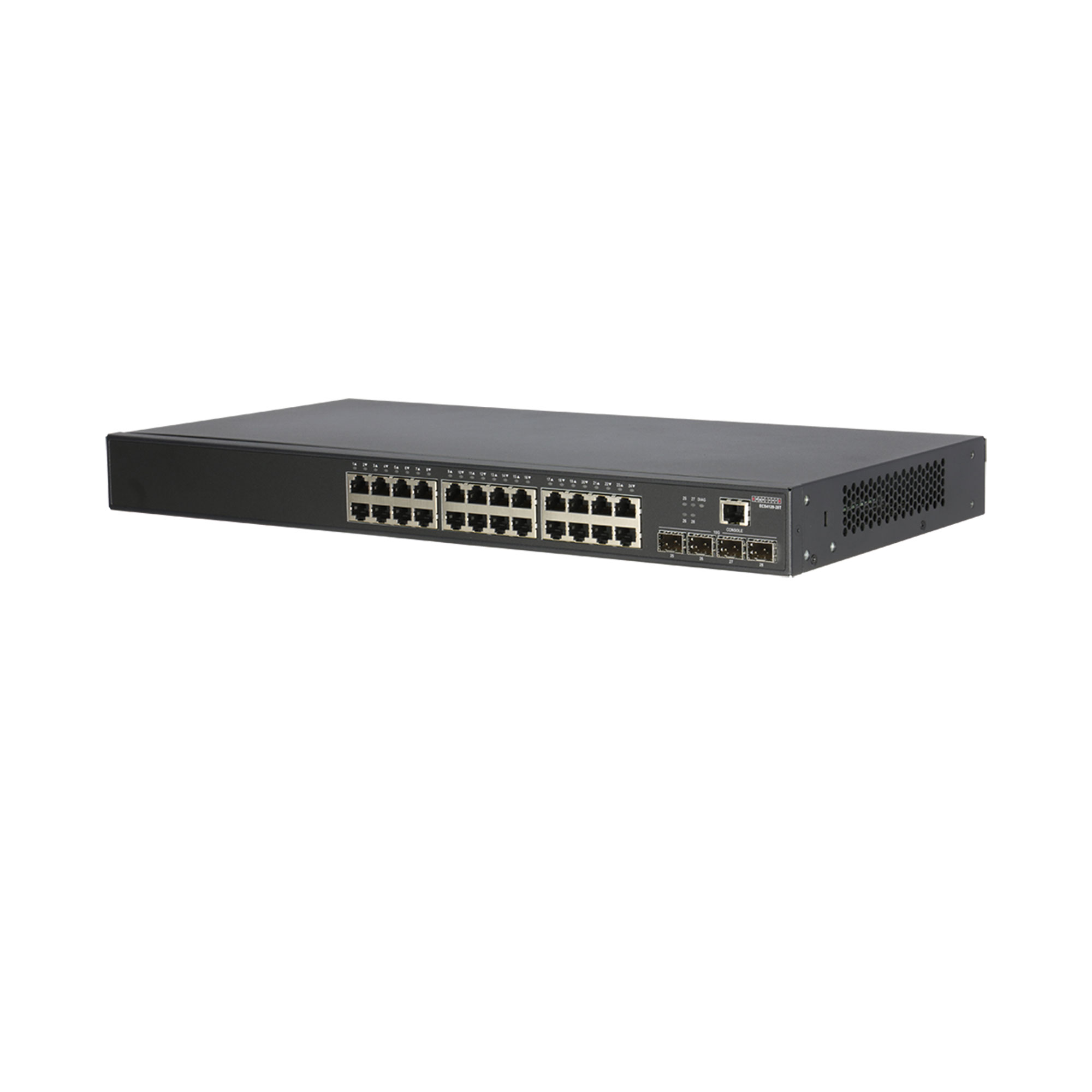
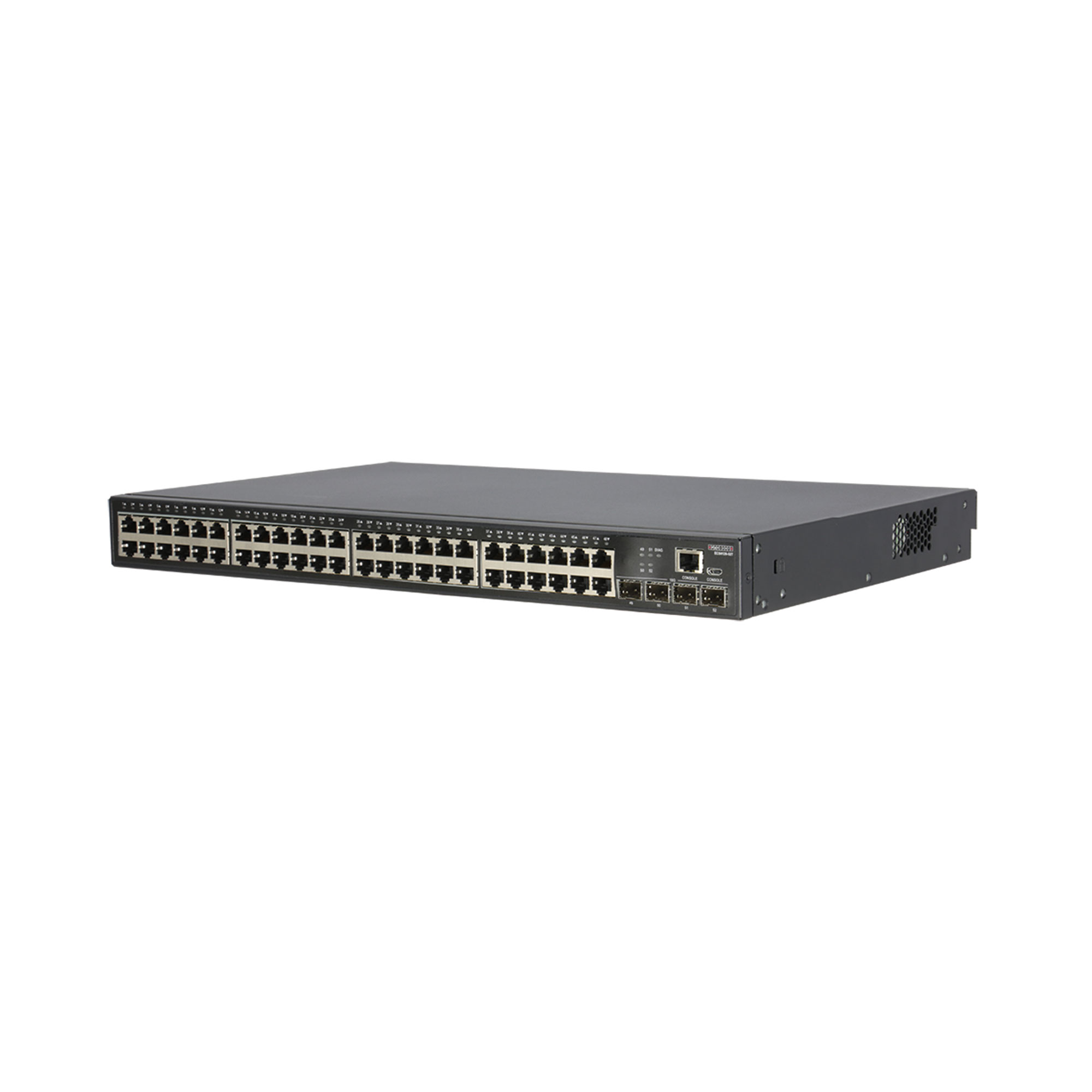
Artikelnummer: RG-S2628G-I


Flexible and Comprehensive Security Control Policies
Adopt various internal security mechanisms to effectively prevent and control virus propagation and network traffic attacks. In this way, the switches can prevent unauthorized users from accessing the network while ensuring rational usage by legitimate network users. These mechanisms include static and dynamic port binding, port isolation, various hardware ACL inspections, bandwidth rate limiting based on data flows, and multi-factor user access control. Thus, the switches meet the requirements of enterprise and campus networks to enforce control over visitors and restrict unauthorized user communications.
To ensure information security without occupying VLAN resources, set ports as protected ports to isolate user communications from each other.
By adopting a dedicated hardware-based ARP spoofing prevention function, effectively prevent increasingly common ARP gateway spoofing and ARP host spoofing on the network while maintaining normal network access.
Utilize DHCP snooping to prevent unauthorized installation of DHCP servers from disrupting IP address allocation and management and affecting normal network usage. Only trusted ports are allowed to respond to DHCP requests. Additionally, RG-S2600G-I series switches, supported by strong DHCP snooping, can effectively prevent ARP host spoofing and source IP address spoofing when DHCP dynamically assigns IP addresses by monitoring ARP and verifying source IP addresses.
Web and Telnet access control based on source IP address strengthens device security by preventing unauthorized personnel or hackers from attacking and controlling devices.
Encrypt management information in Telnet and SNMP operations using Secure Shell (SSH) and SNMPv3, ensuring the security of management information and preventing hackers from initiating attacks, controlling devices, and sniffing the network.
RG-S2600G-I series switches adopt multiple built-in security mechanisms, including static and dynamic port binding, port isolation, multiple types of hardware ACLs (e.g., expert-level ACL, time-based ACL), traffic-based bandwidth rate limiting, and multi-factor secure user access control, to prevent virus propagation, control network traffic attacks, and restrict unauthorized network usage.
High Reliability
The Network Foundation Protection Principle (NFPP) classifies packets (management, forwarding, and protocol), limits their rate, and monitors attacks to provide dual protection for CPU and channel bandwidth. This ensures normal packet transmission and protocol operation, maintaining network stability.
802.1D, 802.1w, and 802.1s tree protocols support fast convergence, improve fault tolerance, and enable proper load balancing and redundant links for normal network operation. PortFast function significantly reduces the standard convergence time of spanning tree protocols, typically 30 to 50 seconds. BPDU protection prevents loops in spanning tree protocols.
Multi-Service Support
As networks carry increasingly diverse services, bandwidth guarantee becomes critical. To prevent non-critical services from occupying bandwidth needed by critical services, the RG-S2600G-I adopts complete QoS mechanisms to distribute multiple services.
Support QoS principles based on 802.1P, DSCP, IP TOS, and Layer 2 to Layer 7 flow filtering, providing traffic classification and flow control for MAC, IP, and application flows. The switches also support bandwidth control and flow policies based on forwarding priorities, allowing networks to provide differentiated service levels for various applications as needed.
Support IPv6-based QoS guarantees. Switches can identify different applications in IPv6 environments and allocate bandwidth for essential services to ensure differentiated service quality.
Each port supports eight egress queues with priority, enabling network administrators to allocate bandwidth to applications efficiently and optimize service distribution. Switches support SP, WRR, and DRR mechanisms for determining packet processing order. For example, SP prioritizes service transmission in a specific queue, while WRR allocates equal opportunities across all queues.
Switch ports support flexible bandwidth control based on combinations of MAC addresses, IP addresses, VLAN IDs, protocols, and applications. The rate-limiting granularity reaches 64 kbps, allowing administrators to adjust bandwidth for different services according to network security requirements.
Convenient and Easy Operation and Management
Adopt flexible Gigabit RJ-45 interfaces and Gigabit fiber ports. Select connection methods according to network architecture.
Support mixed stacking of devices. Stacking allows unified management and operation of multiple devices, reduces management costs, and supports flexible combination and expansion of ports to scale capacity smoothly. This makes the network highly flexible, scalable, and easier to manage.
Support time-synchronized monitoring on multiple ports. Use a single port to monitor data flows across several ports simultaneously. Additionally, monitor ingress, egress, or both directions of frames to improve maintenance efficiency.
Support Network Time Protocol (NTP) and Simple Network Time Protocol (SNTP) to ensure accurate time on switches. These protocols also synchronize time with network servers, facilitating log and traffic analysis as well as fault diagnostics.
Syslog enables unified collection, maintenance, analysis, fault location, and backup of various log information, allowing network administrators to protect and manage the network effectively.
Green Energy Protection Design
S2628G-I series switches feature variable-speed fans with low-temperature rotation to automatically reduce power consumption and noise.