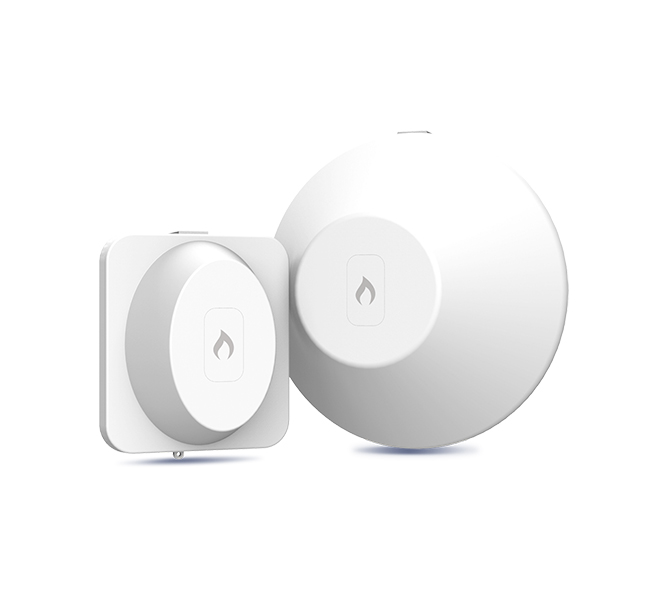
Stock Code: RG-AP530-I


| Hardware Specifications | |
|---|---|
| Model | RG-AP530-I |
| Radio | Dual |
| Protocol | Concurrent 802.11b/g/n and 802.11ac |
| Operating Bands | 2.4GHz and 5GHz |
| Antenna | Built in with an X-Sense Smart Antenna array, which is composed of 24 antennas |
| Spatial Streams | 3 |
| Max Throughput | 1300Mbps and 600Mbps per radio and up to 1900Mbps per AP |
| Modulation | OFDM: BPSK@6/9Mbps, QPSK@12/18Mbps, 16-QAM@24Mbps, 64-QAM@48/54Mbps |
| DSSS: DBPSK@1Mbps, DQPSK@2Mbps, CCK@5.5/11Mbps | |
| MIMO-OFDM: BPSK, QPSK, 16QAM, 64QAM, 256QAM | |
| Receiver Sensitivity | 11b: -96dBm (1Mbps), -93dBm (5Mbps), -89dBm (11Mbps) |
| 11a/g: -91dBm (6Mbps), -85dBm (24Mbps), -80dBm (36Mbps), -74dBm (54Mbps) | |
| 11n: -90dBm@MCS0, -70dBm@MCS7, -89dBm@MCS8, -68dBm@MCS15 | |
| 11ac HT20: -88dBm (MCS0), -63dBm (MCS9) | |
| 11ac HT40: -85dBm (MCS0), -60dBm (MCS9) | |
| 11ac HT80: -82dBm (MCS0), -57dBm (MCS9) | |
| Transmit Power | 100mW (20dBm, transmit power of the RF card only) |
| Antenna gain: 5dBi (2.4GHz and 5GHz) | |
| Adjustable Power | 1dBm |
| Dimensions (W × D × H) (mm) | 220 × 220 × 42 (The height does not include the height of the antenna connector or bracket) |
| Weight | 1.0kg |
| Service Port | Two 10/100/1000Base-T Ethernet uplink ports (support Link Aggregation, LAN1 supports PoE+) |
| Management Port | One console port |
| Lock | Yes |
| LED Indicators | One LED (red, green, blue, orange, and flashing modes, breathing flashing mode for terminal access, and silence can be disabled) |
| Power Supply | DC power adapter (supporting 48VDC local power supplies); 802.3af PoE (802.3at PoE+ for full performance) |
| Power Consumption | Typical: 9.5W, Maximum: 25.5W |
| Environmental | Operating temperature: -10°C to +50°C |
| Storage temperature: -40°C to +70°C | |
| Operating humidity: 5% to 95% (non-condensing) | |
| Storage humidity: 5% to 95% (non-condensing) | |
| Installation Mode | Ceiling/wall-mountable |
| Standards & Certifications | |
| IP Rating | IP41 |
| Safety Standards | GB4943 and EN/IEC 60950-1 |
| EMC Standards | GB9254 and EN301 489 |
| Health Standard | EN 62311 |
| Radio Standards | Model of approved wireless radiation devices, EN300 328, and EN301 893 |
| Wi-Fi Alliance Certification | Yes |
| Software Functions | |
| Maximum number of stations per AP | 256 |
| Virtual AP | A maximum of 32 SSIDs |
| SSID hiding | Yes |
| Configuring the authentication mode, encryption mechanism, and VLAN attributes for each SSID | Yes |
| WDS (bridge mode) | Yes |
| Remote Intelligent Perception Technology (RIPT) | Yes |
| X-speed | Yes |
| Radio Resource Management (RRM) | DCA, TPC |
| Intelligent identification of smart device | Yes |
| Intelligent load balancing based on the number of users or traffic | Yes |
| STA limit | SSID-based, Radio-based |
| Bandwidth limit | STA/SSID/AP-based rate limit |
| Preference 5GHz (band select) | Yes |
| PSK, Web, and 802.1x authentication | Yes |
| Data encryption | WPA (TKIP), WPA2 (AES), WPA-PSK, and WEP (64 or 128 bits) |
| Datagram Transport Layer Security (DTLS) | Yes |
| QR code authentication | Yes |
| SMS authentication | Yes |
| PEAP authentication | Yes |
| Data frame filtering | Whitelist, static blacklist, and dynamic blacklist |
| User isolation | Yes |
| Rogue AP detection and countermeasure | Yes |
| Dynamic ACL assignment | Yes |
| RADIUS | Yes |
| CPU Protection Policy (CPP) | Yes |
| Network Foundation Protection Policy (NFPP) | Yes |
| VLAN (802.1Q) | 1 - 4094 |
| IPv4 address | Static and dynamic IP address |
| IPv4/IPv6 CAPWAP tunnel | Yes |
| ICMPv6 | Yes |
| IPv6 address | Manual or automatic |
| IPv6 tunnel (ISATAP) | Manual or automatic |
| Multicast | Multicast to unicast conversion |
| Network management | Yes |
| Fault detection and alarm, statistics and logs | SNMP v1/v2C/v3; Telnet, SSH, TFTP, FTP, and Web management |
| Switching between the FAT and FIT modes | The AP working in FIT mode can switch to the FAT mode through the RG-WS wireless AC; the AP working in FAT mode can switch to the FIT mode through a local console port or Telnet. |