Stock Code: RG-S2910C-24GT2XS-HP-E


| Hardware Specifications | |
|---|---|
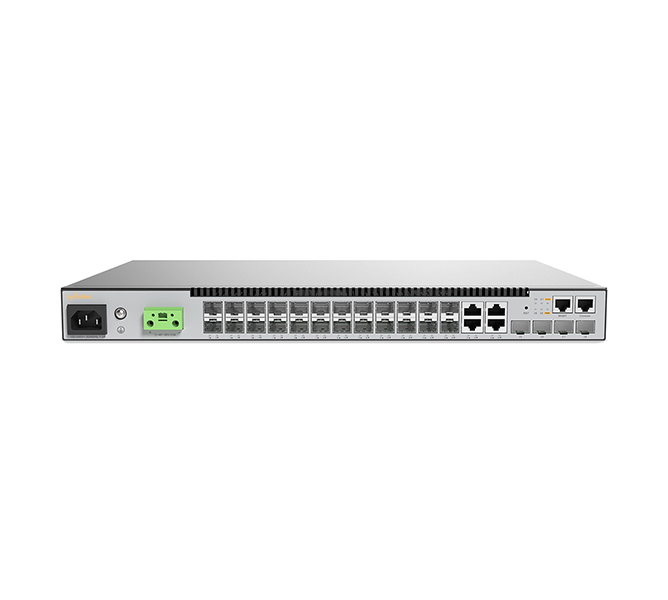
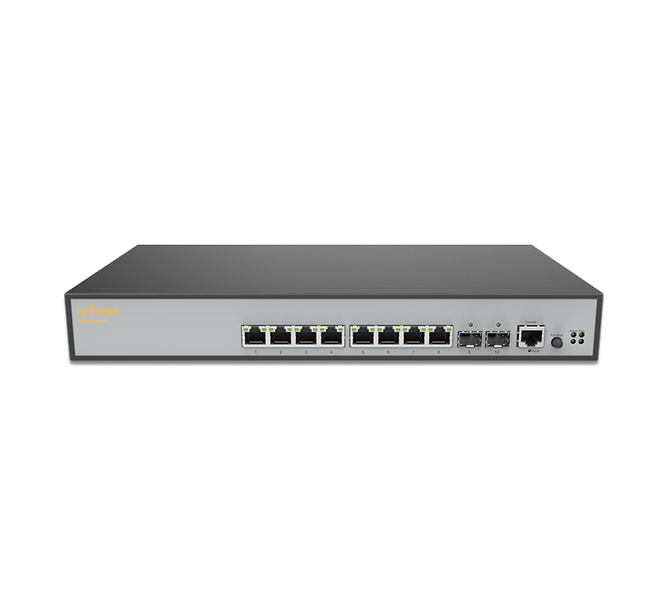
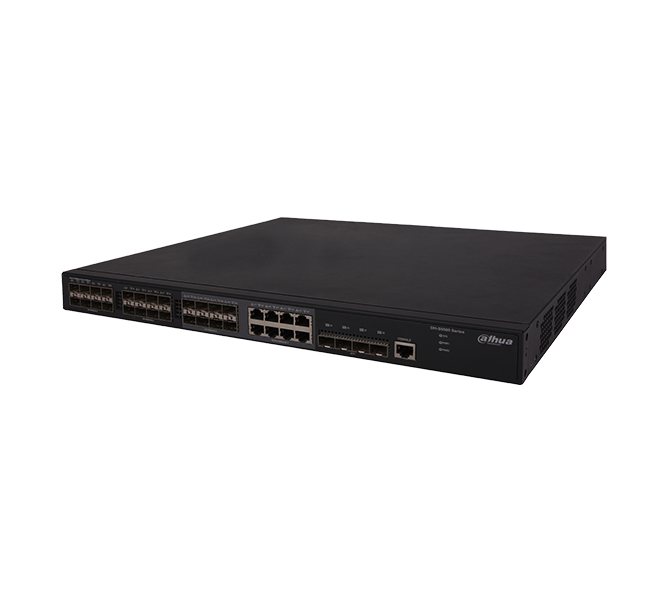
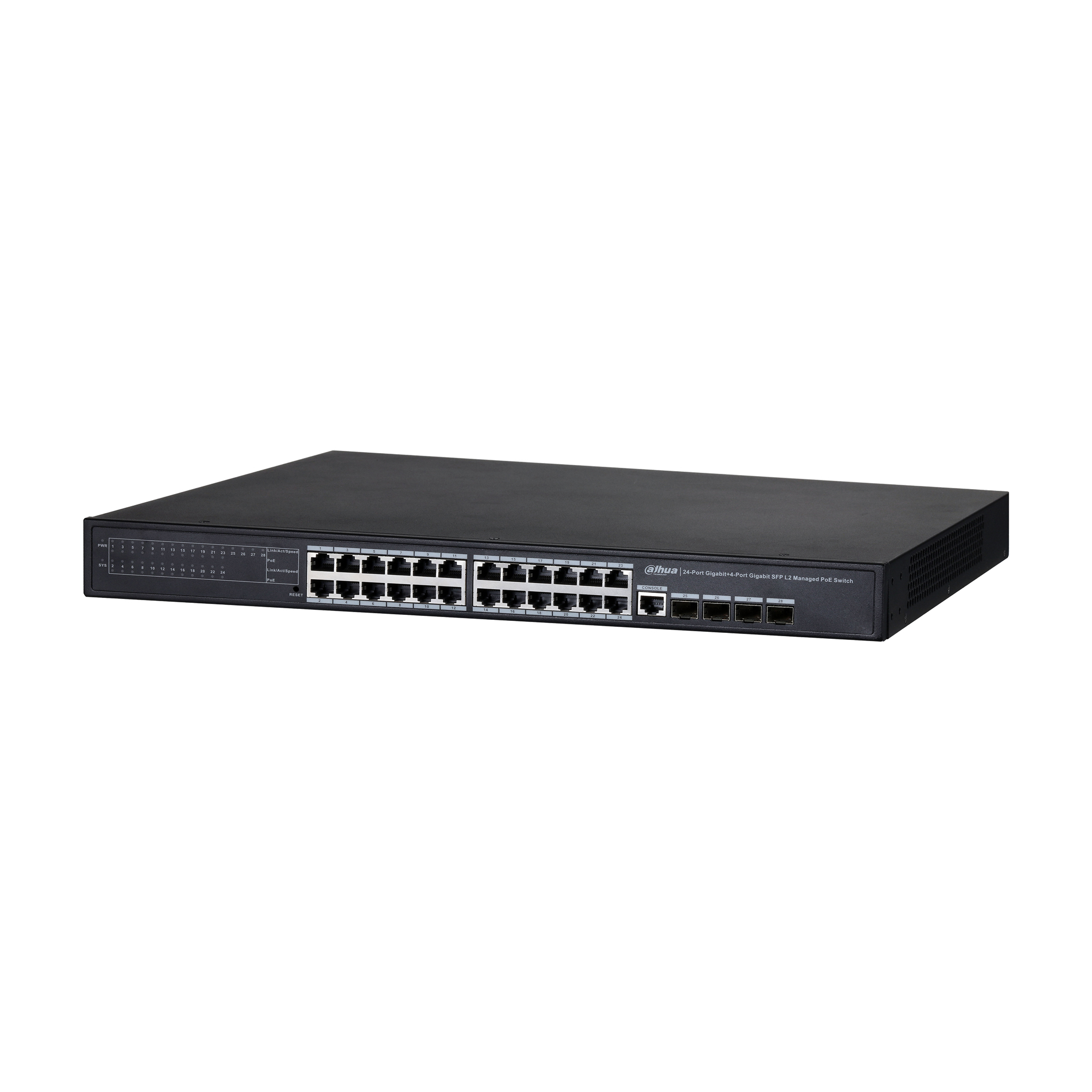
| Ports | 24 × 10/100/1000BASE-T ports (PoE/PoE+) 2 × 100/1000BASE-X SFP ports (combo) 2 × 1G/10GBASE-X SFP+ ports (non-combo) |
| Expansion Slots | 2 |
| Modular Power Slots | 2 |
| Expansion Modules | M2910-01XS M2910-01XT M2910-04XS3 |
| Management Ports | 1 console port 1 USB 2.0 port |
| Switching Capacity | 264 Gbps |
| Packet Forwarding Rate | 96 Mpps |
| Max. Number of 10GE Ports | 4 |
| PoE | IEEE 802.3af and 802.3at power supply standards; Automatic / energy-saving (default) power supply mode; Hot start and uninterrupted power supply; Port priority; Supports stacking of PoE devices |
| Port Buffer | 1.5 MB |
| ARP Table | 1000 |
| MAC Address Table | 16K |
| Routing Table Size (IPv4/IPv6) | 500 (IPv4/IPv6) |
| ACL Entries | Inbound: 1,500 Outbound: 500 |
| Software Specifications | |
| VLAN | 4K 802.1Q VLANs, Port-based VLAN, MAC-based VLAN, Protocol-based VLAN, Private VLAN, Voice VLAN, QinQ, IP subnet-based VLAN, GVRP, Guest VLAN |
| QinQ | Basic QinQ, Flexible QinQ, N:1 VLAN translation, 1:1 VLAN translation |
| Link Aggregation | AP, LACP (up to 8 ports can be aggregated), Cross-device AP, Flow balancing |
| Port Mirroring | One-to-one mirroring, One-to-many mirroring, Flow-based mirroring, Cross-device mirroring, VLAN-based mirroring, VLAN-filtered mirroring, AP port mirroring, RSPAN, ERSPAN |
| Spanning Tree Protocols | IEEE 802.1d STP, IEEE 802.1w RSTP, Standard 802.1s MSTP, Port Fast, BPDU filter, BPDU guard, TC guard, Root guard |
| DHCP | DHCP server, DHCP client, DHCP Snooping, DHCP Relay, IPv6 DHCP Snooping, IPv6 DHCP client, IPv6 DHCP Relay |
| Multiple Spanning Tree Protocol (MSTP) Instances | 64 |
| Max. Aggregation Port (AP) | 128 |
| SDN | OpenFlow 1.0 & 1.3 |
| VSU (Virtual Switching Unit) | Supported (up to 9 stack members), Local and remote stacking, Cross-chassis link aggregation within the stack, Stacking over 10G Ethernet ports |
| SCN (Simplified Campus Network) | Supports building a large L2 network with core devices and reaching the resource pool through VSU and VSD. Management is required only on core devices, thereby simplifying horizontal and vertical network management and maintenance. |
| Zero Configuration | CWMP (TR069) |
| L2 Features | MAC, EEE, ARP, VLAN, Basic QinQ, Flexible QinQ, Link aggregation, Mirroring, STP, RSTP, MSTP, Broadcast / Multicast / Unknown unicast storm control, IGMP v1/v2/v3 Snooping, IPv6 MLD Snooping v1/v2, IGMP SGVL/IVGL, IGMP querier, IGMP filter, IGMP fast leave, DHCP, Jumbo frame, RLDP, LLDP, G.8032 ERPS, Layer 2 protocol tunneling |
| Layer 2 Protocols | IEEE 802.3, IEEE 802.3u, IEEE 802.3z, IEEE 802.3x, IEEE 802.3ad, IEEE 802.1p, IEEE 802.1x, IEEE 802.3ab, IEEE 802.1Q (GVRP), IEEE 802.1d, IEEE 802.1w, IEEE 802.1s, IGMP Snooping v1/v2 |
| Layer 3 Features | IPv4 static routing, RIP, IPv6 static routing, RIPng |
| Layer 3 Protocols (IPv4) | Static routing, RIP |
| IPv4 Features | Ping, Traceroute |
| IPv6 Features | ICMPv6, IPv6 Ping, IPv6 Tracert, Manually configure local address, Automatically generate local address |
| Basic IPv6 Protocols | IPv6 addressing, Neighbor Discovery (ND), ICMPv6, IPv6 Ping and IPv6 Tracert |
| IPv6 Routing Protocols | Static routing, RIPng |
| G.8032 | Supported |
| ACL | Standard / Extended / Expert ACL, Extended MAC ACL, ACL 80, IPv6 ACL, ACL logging, ACL counter, ACL comment, Global ACL, ACL redirection, Time-based ACL |
| QoS | 802.1p / DSCP / ToS traffic classification; Multiple queue scheduling mechanisms such as SP, WRR, DRR, SP+WFQ, SP+WRR, SP+DRR; Ingress / egress port-based rate limiting; Port-based traffic identification; Each port supports 8 priority queues; Flow-based rate limiting with a minimum granularity of 8 Kbps |
| IPv6 ACL | Supported |
| Reliability | VSU (virtualization technology to virtualize multiple devices into one); RIP GR; ERPS (G.8032); REUP dual-link fast switchover technology; RLDP (Rapid Link Detection Protocol); 1+1 power redundancy; Hot-swappable power module |
| EEE Support | Supports IEEE 802.3az standard |
| Security | IP address, MAC address and port address binding; IPv6, MAC address and port address binding; Filtering of invalid MAC addresses; Port-based and MAC-based 802.1x; MAB; Portal and Portal 2.0 authentication; ARP inspection; DAI; ARP packet rate limiting; Gateway anti-ARP spoofing; Broadcast suppression; Hierarchical management and password protection for administrators; RADIUS and TACACS+; Authorization; AAA security authentication in device login management (IPv4/IPv6); SSH and SSH v2.0; BPDU guard; IP source guard; CPP, NFPP; Port protection |
| Manageability | SNMPv1/v2c/v3, CLI (Telnet / Console), RMON (1, 2, 3, 9), SSH, Syslog / Debug, NTP / SNTP, FTP, TFTP, Web, sFlow |
| Hot Patch | Supported |
| Intelligent Temperature Control | Automatic fan speed adjustment; Fan fault alarms; Fan status monitoring |
| Intelligent Power Supply | Power management, Power monitoring |
| Other Protocols | FTP, TFTP, DNS client |
| Dimensions (W × D × H) (mm) | 440 × 320 × 44 |
| Rack Height | 1RU |
| Weight | 5.8 kg (gross) |
| MTBF | > 200 thousand hours |
| Lightning Protection | 4 KV |
| Power Supply | AC power (RG-M5000E-AC500P): Rated voltage range: 100 V – 240 V AC Frequency: 50/60 Hz Rated current range: 3.5 A – 7 A HVDC input: Input voltage range: 192 V – 290 V DC Input current range: 2.5 A – 3.5 A DC power (RG-M5000E-DC500P): Rated voltage range: -36 V – -72 V DC Rated current: 16.5 A AC power (RG-PA1150P-F): Rated voltage range: 100 V – 240 V AC Frequency: 50/60 Hz Rated current: 10 A HVDC input: Input voltage range: 192 V – 290 V DC Rated current: 10 A |
| Power Consumption | 850 W (with 24-port PoE+) |
| PoE Power Consumption | RG-M5000E-AC500P: 370 W RG-M5000E-DC500P: 370 W RG-PA1150P-F: 740 W |
| Temperature | Operating temperature: 0 °C to 50 °C Storage temperature: -40 °C to 70 °C |
| Humidity | Operating humidity: 10% to 90% RH Storage humidity: 5% to 90% RH |
| Operating Altitude | -500 m to 5,000 m |